
I’ve been teaching since 2006, and internationally since 2012. Most of what I think about teaching has come from being in classrooms with very different kinds of learners: three-year-olds figuring out rhythm, middle schoolers writing songs, advanced high school ensembles learning to listen to one another, graduate students designing music technology curricula. Seeing those patterns over time has shaped me and my approach to teaching and learning.
The thing I keep coming back to is this: school music programs often get organized around products. The concert. The audition. The competition. There’s nothing wrong with any of those, but when they become the only measure of a music class’s purpose or quality, the class can stop feeling like a creative space. When the performance becomes the curriculum, students who don’t fit the mold of a polished product can get filtered out before they’ve really started. I’ve spent most of my career trying to design programs that work the other way around: figure out what students are interested in, give them opportunities to take ownership of their own creative endeavors, and explore those areas with them. The result is that every group experiences a similar creative process, but arrives at a different finished product.
What I teach
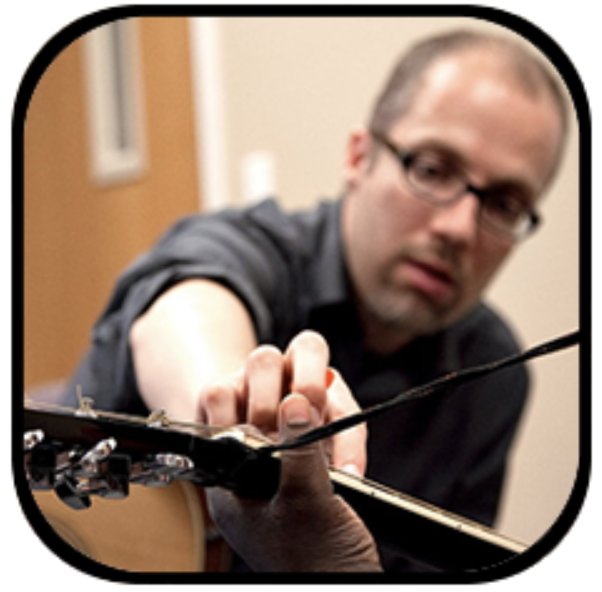
In my career, I have taught Pre-K through Grade 12 general music, AP Music Theory, wind band, string orchestra, choir, musical theater, audio and music production, songwriting, samba and world percussion, modern rock band, and beginning guitar. I currently teach Grades 6–9 Performing Arts at Nishimachi International School in Tokyo, and graduate-level Advanced Music Technologies for Troy University.
The breadth is partly because I’ve worked in a lot of different school contexts, and partly because I think music belongs to kids at every age and level. Teaching across that range has shaped how I think about music and human learning.
How I think about creative learning
A few things I’ve come to believe over twenty years.
Process matters more than product. I still care about good concerts; performing at a high level is essential for student growth. But I care a lot more about what happens during rehearsals, and whether kids are making real decisions, and whether they leave the program more curious than when they started.
Authentic creative work doesn’t have to wait. Three-year-olds can compose. First-week guitarists can write a song. Beginning wind players can make real artistic choices about dynamics or phrasing or how a piece should feel. I don’t think you have to earn your way into creativity by slowly climbing up Bloom’s taxonomy like a ladder. I think creativity is what makes the other stuff worth learning.
My job as a teacher is closer to facilitator than director. When I let students make the calls (what songs to perform, how to stage them, how to interpret each moment) the concert is sometimes a little rougher than it could be. But the learning that kids experience in the process shows growth in ways I don’t see when every decision comes from me. I’ve decided I’m okay with that trade.
How that looks in practice
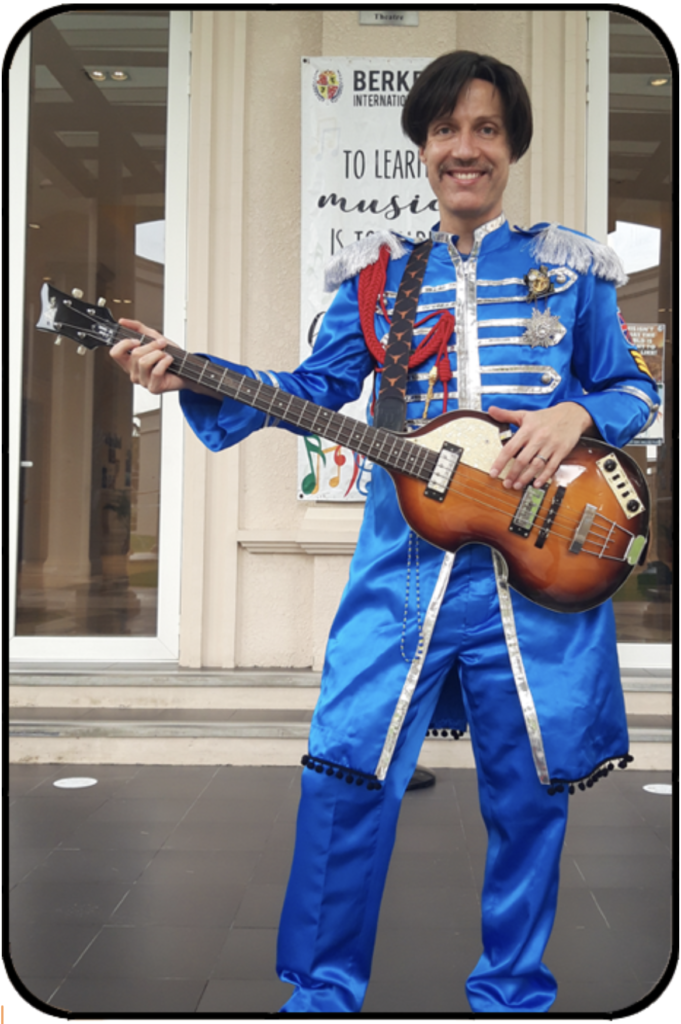
Dressing up as Paul McCartney for a lesson on The Beatles (Berkeley International School, 2022)
A few examples from years of trying things.
At Thai-Chinese International School in Bangkok, my high school wind band performed at every single Monday assembly for eight years. The students selected a new song every week that I would arrange myself, differentiating the parts to match each student’s ability. New repertoire every Monday meant they had to be fluent across a lot of styles and develop strong sight-reading habits fast. These informal performances every Monday held much greater value than the end-of-semester concerts. By the time I left in 2020, secondary elective music enrollment had grown to 88% of the high school population, with major ensembles in wind band (50+ members), orchestra, choir, percussion, rock band, and audio production. We took the band and orchestra to England twice for the Harrogate International Youth Festival, including a 2017 performance of Sgt. Pepper’s Lonely Hearts Club Band in its entirety, which I arranged for wind band and strings to mark the album’s 50th anniversary.
At Berkeley International School, my Rock Band and Audio Production students wrote, recorded, and performed eight original songs based on the United Nations Sustainable Development Goals. They picked the goals that resonated with them, crafted the lyrics and music, recorded studio-quality tracks to put on YouTube, and performed their songs live for the school community to raise money for SDG-adjacent community service goals. This entire project went from blank page on day one to a fundraising recording project and public concert in a single semester.
At the International School of the Sacred Heart in Tokyo, I arranged a thirteen-minute Studio Ghibli medley for our Grade 5 to 12 string orchestra, differentiated across a wide range of abilities so beginners and advanced players could perform together meaningfully. There were beginners in both grade 6 and grade 11, and some of the strongest ensemble members were in grade 8 or 9. It didn’t matter. They were a phenomenal Grade 5 to 12 string orchestra full of students making music together.
In May 2026, I wrote, directed, and produced Paulo and the Noise, an original two-act musical featuring a live samba bateria, pit orchestra, and more than 100 students in Grades 6 through 9 across three rotating casts. Students made real decisions throughout: instrument choices, performance interpretation, costume direction, and some of the songs themselves came from student input.
One small moment from a long time ago that I still think about. A first-year guitar student playing the bass line on “Beat It” with seniors who could play the Eddie Van Halen guitar solo. Same arrangement, different parts, every kid contributing what they could. That’s the performing arts space I’m constantly trying to build.
Learning at the source
I keep studying my craft, bringing what I learn back to the classroom, and sharing those thoughts with other educators.
In March 2012 I traveled to London for a lecture by Brian Kehew and Kevin Ryan, the authors of Recording the Beatles, inside Studio 2 at Abbey Road. They played the final chord of “A Day in the Life” on the original instruments in their original positions in the room, and it sounded exactly like the record. That experience has stayed with me. I love learning about the history of recording and how music has influenced and reflected society.
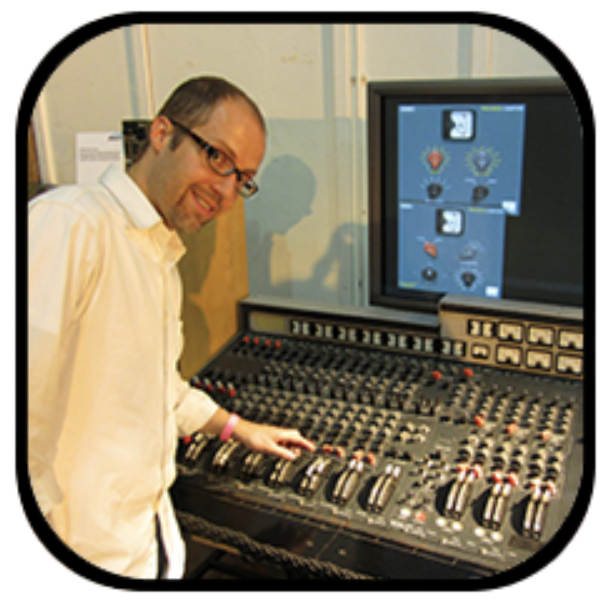
Before international teaching, I worked as an audio engineer in Nashville with Shay Watson and Joe Nash of Watson & Nash. I co-wrote “Falling Into You,” which Kristine Rommel toured on for years, and I produced and engineered for Barry Russo and other independent artists. I still teach audio production from what I learned in that job, and though it was not formally a teaching job, it deeply informed the skills I bring to the classroom.
I studied arranging with Alfred Music’s Ralph Ford, music composition with Carl Vollrath, and music industry with Robert W. Smith at Troy University. My graduate work at the University of Texas at Austin focused on ethnomusicology, and I’ve spent time learning Indian sitar and tabla, Brazilian batucada samba, and Indonesian gamelan. I think a lot about the way musical pedagogy is culturally embedded. Music can’t and shouldn’t all be taught through a Western ensemble lens, because the way a tradition is taught is often part of what makes that music meaningful.
I’ve presented at EARCOS and AMIS conferences on teaching music through popular music, developing and implementing rock band and recording arts programs, and facilitating Brazilian samba drumming in the K to 12 classroom.
What I’m exploring now
I’m interested in what creative classrooms could look like beyond the music room. The habits we use in rehearsal, composition, production, and performance, such as active listening, shared decision-making, and collective brainstorming, feel transferable to other subjects. I’d like to keep building things that other teachers can use, in any subject, and in any classroom, not just my own. Paulo and the Noise is one example of what that could look like. I want to build more, and I want to dive deeper into what creative pedagogy can be.
The more I learn, the less I know. The more we ask, the more we grow.